
People

People
Professor
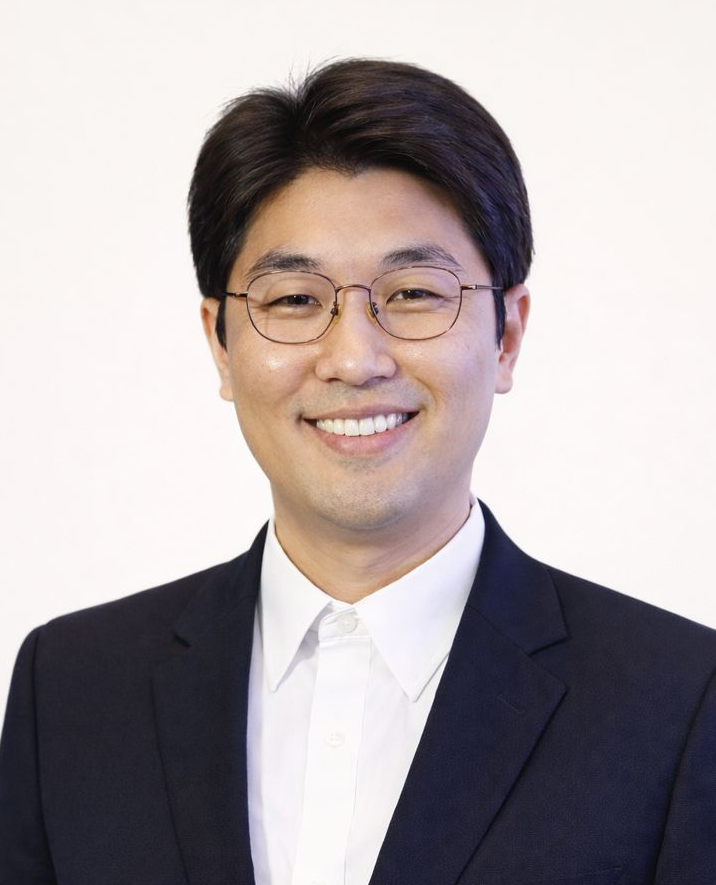
Joonwoo Jeong정준우
- 위치108동 501-7호
- 메일jjeong@unist.ac.kr
- 전화052-217-2155
연구주제
Experimental Soft Matter Physics
- 연구분야Experimental Soft Matter Physics
- 연구실Experimental Soft Matter Physics Lab
Current Research Interests
- Examples of soft matter include polymers (plastics), liquid crystals (displays), emulsions (cosmetics), surfactants (soaps), and biomaterials (cell membrane), which are all ubiquitous in our daily life. We define soft matter as all physicochemical systems that have large responses to external stimuli. It is not only an emerging field in condensed matter physics but also an interdisciplinary field between chemistry, chemical engineering, material science, and biology. Our laboratory studies structures and dynamics of soft matter using various experimental methods including microscopy and scattering, and develop new materials with desired properties based on the understanding of underlying physics.
- Physics and applications of liquid crystals and topological defects
- Pattern formation in soft matter: geometry and competing interactions
- Microfluidics of active matter and non-Newtonian fluids
Biographical Sketch
- B.S. in Physics (2007), KAIST, Daejeon, Korea
- Ph.D. in Physics (2012), KAIST, Daejeon, Korea / Effect of external fields on soft matter systems: liquid crystals in elliptic confinement (Advisor: Prof. Mahn Won Kim)
- Postdoctoral research fellow in Department of Physics and Astronomy, University of Pennsylvania, PA, U.S.A. (2012 ~ 2014)
- Assistant Professor in Department of Physics, UNIST (2015 – )
Selected Publications
- Motility Modulates the Partitioning of Bacteria in Aqueous Two-Phase Systems, Physical Review Letters (2025)
- Symmetrically pulsating bubbles swim in an anisotropic fluid by nematodynamics, Nature Communications (2024)
- Focal conic flowers, dislocation rings, and undulation textures in smectic liquid crystal Janus droplets, Soft Matter (2022)
- Tomographic measurements of dielectric tensors at optical frequency, Nature Materials (2022)
- Layering transitions and metastable structures of cholesteric liquid crystals in cylindrical confinement, PNAS (2021)
- High-resolution neutron imaging reveals kinetics of water vapor uptake into a sessile water droplet, Matter (2021)
- Phase synchronization of fluid-fluid interfaces as hydrodynamically coupled oscillators, Nature Communications (2020)